


Why Is My Teen Falling Behind in School Even When They Understand the Work?
Your teenager sits in class, follows the lesson, and seems to understand the material. At home, they can explain what

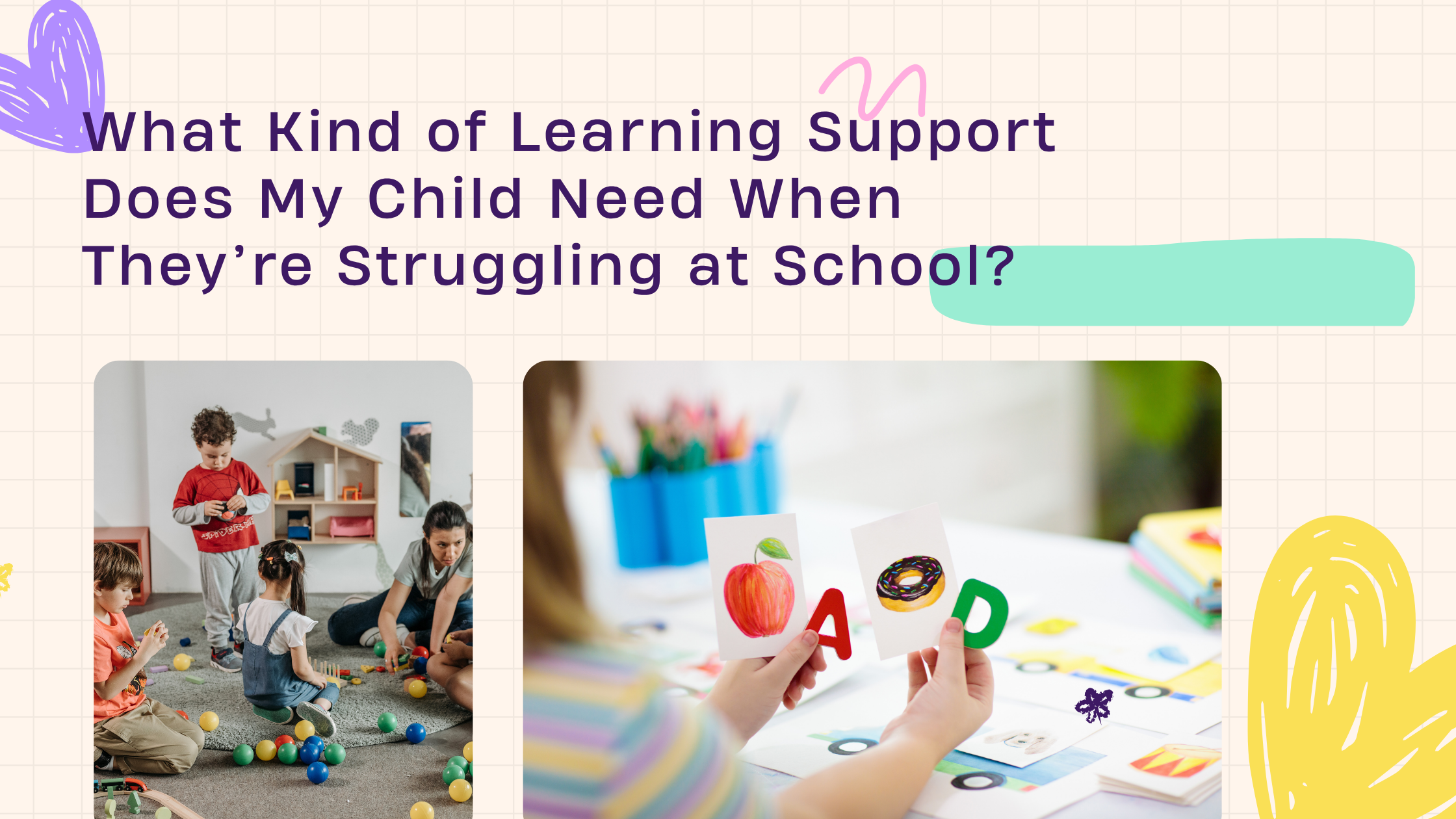
When a child begins struggling at school, one of the first questions parents ask is: What kind of help do they actually need?
The answer is not always obvious. A child who avoids reading may need something very different from a child who reads fluently but cannot explain what they have read. A student who understands a math lesson in class but cannot apply the concept independently has a different challenge from a student who has difficulty getting ideas onto paper.
This is why finding the right learning support begins with understanding where the difficulty is happening. For families in Montreal, there are many tutoring and educational support options available. Before choosing one, it helps to look closely at the pattern behind your child’s difficulties rather than focusing only on the latest low grade, unfinished assignment or frustrating homework session.
“Struggling at school” can mean many different things. One child may spend twice as long as expected reading a chapter. Another may read it quickly but remember very little. Another understands the material when speaking but cannot organize the same ideas in writing. Parents may notice difficulties such as:
Looking at the specific pattern helps narrow down what type of learning support for children may be appropriate. The goal is not simply to find “more help.” It is to identify the kind of help that addresses the skill that is actually creating the difficulty.
Some children work extremely hard to read but continue to struggle with decoding, recognizing words, reading fluently or spelling accurately. You may notice that your child:
In this situation, repeatedly practising the same school reading material may not be enough. A structured reading intervention program focuses on developing the underlying reading skills a student needs to become a more independent reader. Depending on the child’s needs, this can include phonemic awareness, phonics, decoding, fluency, vocabulary and other foundational literacy skills.
For Montreal families considering reading tutoring, the important distinction is whether the child simply needs help with current schoolwork or whether there is a persistent reading skill that needs more targeted instruction.
Sometimes reading itself is not the obvious problem. A child may read a paragraph aloud accurately and still be unable to explain what happened, identify the main idea, make an inference or remember important information afterward. Parents often describe this as:
“They can read it, but they don’t seem to understand it.”
This points toward reading comprehension rather than basic decoding alone. Comprehension requires students to connect information, create meaning, identify relationships between ideas and build a mental picture of what they are reading or hearing. For students who can decode words but struggle to understand sentences, paragraphs or larger texts, the Visualizing and Verbalizing program can provide a more targeted approach to developing comprehension and language-thinking skills. This distinction matters because asking a child to simply “read more” may not address the part of the reading process that is causing difficulty.
Another common pattern appears when a child can tell you exactly what they want to say but has difficulty putting those thoughts onto paper. They may have good ideas during a conversation but produce very short written answers. Longer assignments can become overwhelming, and essays may lack structure even when the student understands the topic. You might notice:
In these cases, the difficulty may lie in the writing process rather than in understanding the subject itself. A structured writing program can help students learn how to generate ideas, organize them, develop sentences and paragraphs, revise their work and gradually manage more complex written assignments. The objective is not simply to improve one essay. It is to build a process the student can use independently across subjects.
Math struggles can also look very different from one student to another. Some children have difficulty remembering basic facts. Others can perform a calculation after being shown how but cannot independently decide what to do when the problem looks slightly different. Parents may notice that their child:
When foundational understanding is weak, moving ahead to more advanced material can make the gap increasingly difficult to manage. A math remediation program takes a different approach from simply helping a student finish tonight’s homework. The focus is on identifying missing foundational concepts and systematically developing the understanding needed for more advanced mathematics. For some students, rebuilding those foundations can be more appropriate than repeatedly practising grade-level questions they are not yet ready to solve independently.
When reading and spelling difficulties continue despite instruction and practice, parents may begin wondering whether dyslexia or another reading difficulty could be involved. Possible signs can include persistent problems with decoding, phonemic awareness, spelling, reading fluency or recognizing familiar words. These difficulties should not be judged from one symptom alone. A proper understanding of the student’s learning profile is important before deciding what kind of intervention is appropriate.
When dyslexia or a significant reading difficulty is involved, a structured dyslexia program can focus on the specific literacy skills that need to be developed rather than simply providing additional practice with school assignments. This is another reason why identifying the nature of the difficulty matters. Two children who both receive low reading grades may need very different forms of support.
For families in Quebec, language adds another important layer. A child may perform well in English but experience persistent difficulty with French reading or spelling. Other students may struggle across both languages. When the difficulty is specifically related to French literacy, English reading intervention is not automatically the appropriate solution.
SLC’s French reading program, EMS (Enseignement multisensoriel simultané), is designed specifically for students experiencing persistent difficulty with French reading and spelling. This can be particularly relevant for students who have received extra French help but continue to struggle with reading accuracy (decoding) and spelling. Understanding whether the difficulty exists primarily in French or across languages can therefore be an important part of deciding what support to explore.
This is often where parents become confused because the words can sound interchangeable. They are not necessarily the same thing. Tutoring generally helps a student work with current academic material. A tutor might explain this week’s math concept, review material for an upcoming test or help a student understand a particular assignment.
Remedial support looks further back. If a student is struggling because an underlying reading, writing, comprehension or mathematical skill has not developed sufficiently, simply helping with today’s schoolwork may leave that underlying gap unchanged. This does not mean tutoring is ineffective. It means the right approach depends on the problem being addressed.
Parents searching for tutoring Montreal or remedial tutoring Montreal should therefore ask a more specific question:
Does my child need help keeping up with current material, or is there an underlying skill that needs to be developed?
That distinction can make the search for support much clearer.
Learning difficulties do not always fit neatly into one category. A student may struggle with both reading and writing. Weak comprehension can affect performance in language arts, science, history and even math word problems. A student with reading difficulties may also begin avoiding assignments simply because completing them requires so much effort. That is why looking at the whole learning profile matters. Rather than assuming every difficulty requires a separate solution, parents can begin by asking:
You do not need to diagnose the problem yourself before asking for help. In fact, choosing a program before understanding the difficulty can sometimes send families in the wrong direction. A child struggling with comprehension does not necessarily need the same intervention as a child struggling to decode words. A student who cannot organize written ideas may not need the same support as one with foundational spelling difficulties. And persistent math difficulties require a different approach again.
The first step should therefore be understanding your child’s specific pattern of strengths and difficulties. At Strategic Learning Clinic in Montreal, this begins with a conversation about the student’s history, current concerns, previous support and the areas in which difficulties are appearing. When appropriate, further evaluation can help clarify the learning profile before a program is recommended. The purpose is not to place every child into the same type of support. It is to determine what kind of intervention, if any, makes sense for that individual student.
Watching your child struggle at school can create pressure to act quickly. But “more help” is not always the same as the right help. If the difficulty is reading, determine whether the problem is decoding, fluency or comprehension. If it is writing, look at where the writing process begins to break down. If math difficulties continue year after year, consider whether foundational concepts are secure. And if French literacy is the primary concern, look at support specifically designed around French reading and spelling.
Once the problem becomes clearer, choosing the appropriate support becomes much easier. For families in Montreal who are unsure where to begin, Strategic Learning Clinic offers an introductory consultation to discuss what their child is experiencing, what has already been tried, and what the most appropriate next step may be.
Not sure which type of support fits your child's needs?
Schedule an introductory call with Strategic Learning Clinic to discuss your child's learning profile and possible next steps.
The appropriate support depends on where the difficulty is occurring. Persistent problems with decoding, comprehension, writing, mathematics or French literacy may each require a different approach. Looking at the pattern of difficulty is more useful than choosing support based only on a subject grade.
Your teenager sits in class, follows the lesson, and seems to understand the material. At home, they can explain what

It’s September, and somewhere between school supply lists and soccer registration, a thought creeps in: wait, isn’t this the year
Your child understands the lesson when it is explained aloud. They may speak conversational French, recognize familiar classroom words, and